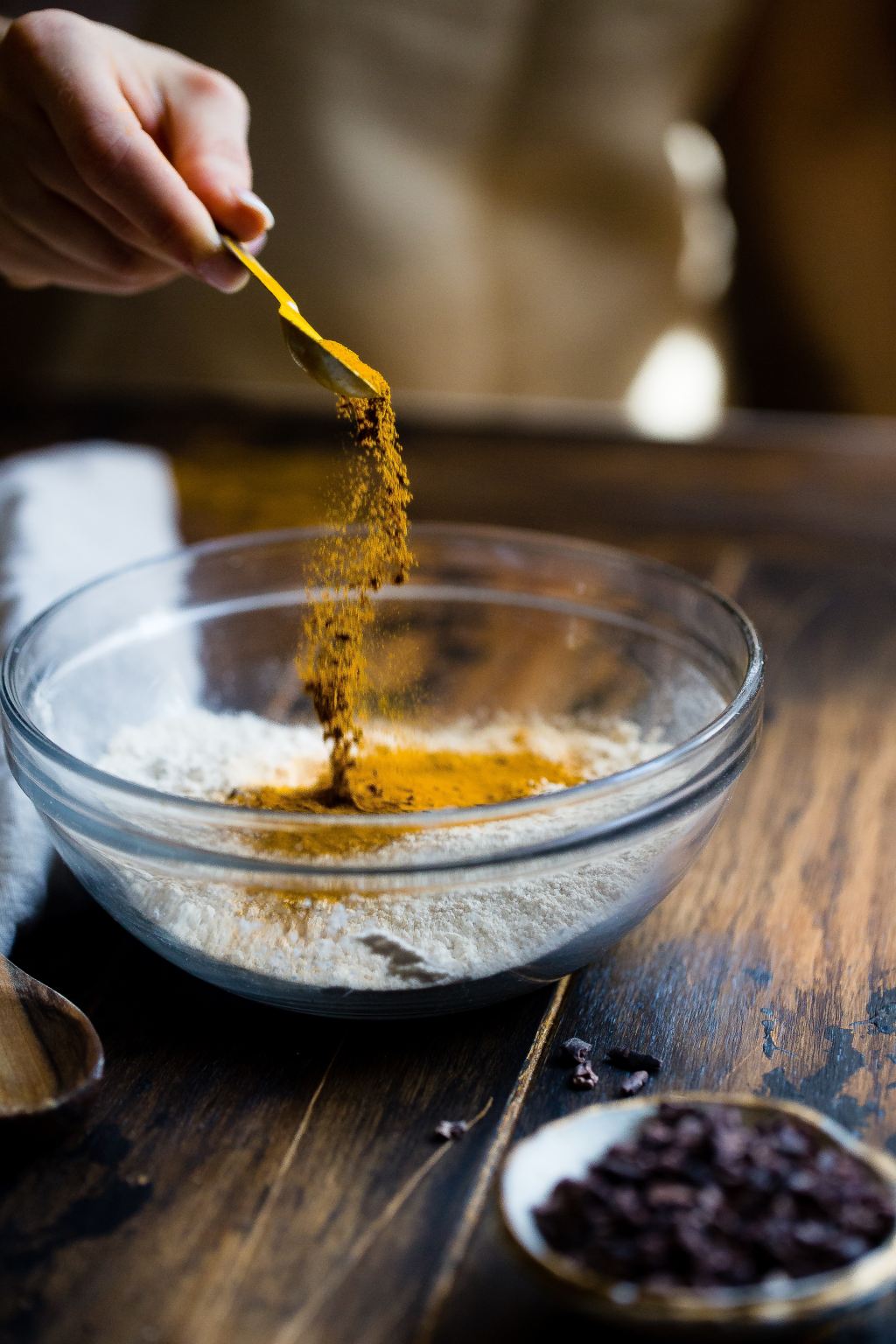
- 薑黃含有生物活性化合物
- 薑黃素是天然抗炎化合物
- 薑黃素可促進新腦細胞的發育
- 薑黃素可能降低心臟病風險
- 薑黃可能有助於預防癌症
- 薑黃素可能有助於治療阿茲海默症
- 關節炎患者對薑黃素補充劑反應良好
- 薑黃素對憂鬱症有益
- 薑黃素可能延緩衰老並對抗與年齡相關的慢性疾病
- 常見問題
- 總結
研究顯示,薑黃對身體和大腦具有多種潛在益處。這些益處大多來自其主要活性成分——薑黃素。
薑黃是一種屬於薑科的香料。在印度,薑黃已有數千年作為香料和藥用植物的使用歷史。研究[1]顯示,薑黃含有具有藥用價值的化合物。
這些化合物被稱為薑黃素類化合物,其中最重要的是薑黃素,它是薑黃中的主要活性成分。
薑黃含有生物活性化合物
薑黃含有多種生物活性化合物[2],這些化合物具有多種潛在益處,如改善腸道健康和免疫系統。
薑黃素是脂溶性的,這意味著它在脂肪或油中分解和溶解。因此,服用薑黃素補充劑時搭配高脂肪餐可能是個好主意。
薑黃素是天然抗炎化合物
薑黃素是一種生物活性物質,可以幫助對抗炎症[3],儘管需要非常高的劑量才能產生藥用效果。
即便如此,它仍具有對抗多種疾病和病症(如類風濕性關節炎)中炎症的潛力。
薑黃可增強人體抗氧化能力
氧化損傷被認為是衰老和多種疾病原因之一。
它涉及自由基,這些高反應性分子可能對體內其他細胞造成損害。
薑黃素是一種強效抗氧化劑[4],因其化學結構可中和自由基。
仍需進一步的臨床研究來確認這些益處。
薑黃素可促進新腦細胞的發育
即使在成年期,腦神經元也能形成新的連結,在大腦的某些區域,它們可以增殖並增加數量。
這一過程的主要驅動因素之一是腦源性神經營養因子(BDNF)[5],它在記憶和學習中發揮作用,並在控制飲食、飲水和體重的腦區中存在。
許多常見腦部疾病與BDNF蛋白水平降低有關[6],包括憂鬱症和阿茲海默症。
研究發現,薑黃素可能增加腦內BDNF水平[7]。通過這種方式,它可能有效延緩甚至逆轉許多腦部疾病和與年齡相關的腦功能下降。然而,仍需更多研究來證實這一點。
薑黃素可能降低心臟病風險
心臟病是全球頭號死因[8]。研究顯示[9],薑黃素可能有助於保護心臟病過程中的多個環節。
其他多項研究也顯示[10],薑黃素可改善心臟健康。此外,薑黃素有助於減少炎症和氧化[11](如同上所述),這些在心臟病中起到作用。
薑黃可能有助於預防癌症
多種癌症似乎受到薑黃素補充劑的影響[11]。
事實上,薑黃素已被研究作為癌症治療中的有益草藥,並被發現可影響癌症的生長和發育。
研究顯示[12],它可以:
- 促進癌細胞死亡
- 減少血管生成(腫瘤中新血管的生長)
- 減少轉移(癌症的擴散)
然而,仍需進一步研究。重要的是要知道,薑黃素不能治療癌症,補充劑不應替代醫療治療。
薑黃素可能有助於治療阿茲海默症
阿茲海默症是最常見的癡呆類型,可能占癡呆病例的70%[13]。
已知炎症和氧化損傷在阿茲海默症中起作用[14],薑黃素被發現對兩者均有有益效果。
不過,薑黃素能否減緩甚至逆轉人類阿茲海默症的進展,目前尚不清楚,需要進一步研究。
關節炎患者對薑黃素補充劑反應良好
關節炎有多種類型,大多數涉及關節炎症。
在一項針對骨關節炎患者的研究中[15],薑黃素在緩解疼痛方面似乎比安慰劑更有效,研究[16]還發現其效果與非類固醇抗炎藥(NSAIDs)相似。
不過,仍需更多研究來了解薑黃素是否可以真正替代此類藥物作為關節炎炎症疼痛的治療。
薑黃素對憂鬱症有益
薑黃素在治療情緒障礙方面顯示出一些潛力。它對大腦的積極作用包括增強腦內神經遞質血清素和多巴胺,減少炎症,並促進腦可塑性。這表明該草藥可能[17]是一種有效的抗憂鬱劑。
薑黃素可能延緩衰老並對抗與年齡相關的慢性疾病
如果薑黃素確實能預防心臟病、癌症和阿茲海默症,它也可能對長壽有益。
鑑於氧化和炎症被認為在衰老中起作用[18],薑黃素可能具有遠超疾病預防的效果。然而,仍需進一步研究。
常見問題
每天服用薑黃好嗎?
鑑於薑黃對健康的多種有益特性,每天服用它並非壞主意。如果您堅持每天10克或更少的劑量[19],不太可能出現腹瀉、便秘或嘔吐等副作用。
誰不適合服用薑黃?
孕婦或哺乳期女性、患有膽囊或腎臟問題的人、患有出血性疾病或缺鐵的人應限制薑黃的攝入。如果您有上述任何情況,請在服用薑黃前諮詢醫生。
總結
薑黃——尤其是其最活性化合物薑黃素——具有多種潛在健康益處,如改善心臟健康,預防阿茲海默症和癌症。
它是一種強效的抗炎和抗氧化劑。它還可能幫助改善憂鬱症和關節炎的症狀。
雖然這些益處是可能的,但由於薑黃素的生物利用度較低,目前效果有限,仍需更多研究來了解其確切作用。
本文翻譯自 Kris Gunnars, BSc 的專欄,並由美國註冊營養師 Marie Lorraine Johnson MS, RD, CPT 進行醫學審查。
參考文獻:
- Fu, Y.-S., Chen, T.-H., Weng, L., Huang, L., Lai, D., & Weng, C.-F. (2021). Pharmacological properties and underlying mechanisms of curcumin and prospects in medicinal potential. Biomedicine & Pharmacotherapy, 141, 111888. https://doi.org/10.1016/j.biopha.2021.111888
- Iweala, E. J., Uche, M. E., Dike, E. D., Etumnu, L. R., Dokunmu, T. M., Oluwapelumi, A. E., Okoro, B. C., Dania, O. E., Adebayo, A. H., & Ugbogu, E. A. (2023). Curcuma longa (Turmeric): Ethnomedicinal uses, phytochemistry, pharmacological activities and toxicity profiles—A review. Pharmacological Research – Modern Chinese Medicine, 6, 100222. https://doi.org/10.1016/j.phrs.2023.100222
- Dehzad, M. J., Ghalandari, H., Nouri, M., & Askarpour, M. (2023). Antioxidant and anti-inflammatory effects of curcumin/turmeric supplementation in adults: A GRADE-assessed systematic review and dose–response meta-analysis of randomized controlled trials. Cytokine, 164, 156144. https://doi.org/10.1016/j.cyto.2023.156144
- Jakubczyk, K., Drużga, A., Katarzyna, J., & Skonieczna-Żydecka, K. (2020). Antioxidant potential of curcumin—a meta-analysis of randomized clinical trials. Antioxidants (Basel), 9(11), 1092. https://doi.org/10.3390/antiox9111092
- Mizoguchi, Y., Yao, H., Imamura, Y., Hashimoto, M., & Monji, A. (2020). Lower brain-derived neurotrophic factor levels are associated with age-related memory impairment in community-dwelling older adults: The Sefuri study. Scientific Reports, 10, Article 16442. https://doi.org/10.1038/s41598-020-73522-1
- Li, G., Wu, Q., Wang, C., Deng, P., Li, J., Zhai, Z., & Li, Y. (2025). Curcumin reverses cognitive deficits through promoting neurogenesis and synapse plasticity via the upregulation of PSD95 and BDNF in mice. Scientific Reports, 15, Article 1135. https://doi.org/10.1038/s41598-025-10607-6
- World Health Organization. (2024, August 7). The top 10 causes of death. Retrieved from https://www.who.int/en/news-room/fact-sheets/detail/the-top-10-causes-of-death
- Cox, F. F., Misiou, A., Vierkant, A., Ale-Agha, N., Grandoch, M., Haendeler, J., & Altschmied, J. (2022). Protective effects of curcumin in cardiovascular diseases—Impact on oxidative stress and mitochondria. Cells, 11(3), 342. https://doi.org/10.3390/cells11030342
- Salehi, B., Del Prado-Audelo, M. L., Cortés, H., Leyva-Gómez, G., Stojanović-Radić, Z., Singh, Y. D., Patra, J. K., Das, G., Martins, N., Martorell, M., Sharifi-Rad, M., Cho, W. C., & Sharifi-Rad, J. (2020). Therapeutic applications of curcumin nanomedicine formulations in cardiovascular diseases. Journal of Clinical Medicine, 9(3), 746. https://doi.org/10.3390/jcm9030746
- Frederike Cox, F., Misiou, A., Vierkant, A., Ale-Agha, N., Grandoch, M., Haendeler, J., & Altschmied, J. (2022). Protective effects of curcumin in cardiovascular diseases—Impact on oxidative stress and mitochondria. Cells, 11(3), 342. https://doi.org/10.3390/cells11030342
- Zoi, V., Galani, V., Lianos, G. D., Voulgaris, S., Kyritsis, A. P., & Alexiou, G. A. (2021). The role of curcumin in cancer treatment. Biomedicines, 9(9), 1086. https://doi.org/10.3390/biomedicines9091086
- National Cancer Institute. (n.d.). Curcumin (Curcuma, turmeric) and cancer (PDQ®)—Health professional version. Retrieved from https://www.cancer.gov/about-cancer/treatment/cam/hp/curcumin-pdq
- World Health Organization. (n.d.). Dementia. Retrieved from https://www.who.int/news-room/fact-sheets/detail/dementia
- Sathyabhama, M., Priya Dharshini, L. C., Karthikeyan, A., Kalaiselvi, S., & Min, T. (2022). The credible role of curcumin in oxidative stress-mediated mitochondrial dysfunction in mammals. Biomolecules, 12(10), 1405. https://doi.org/10.3390/biom12101405
- Van Ameyde, M., & Hodgden, J. (2022). In patients with osteoarthritis, is curcumin, compared to placebo, effective in reducing pain? J Okla State Med Assoc, 115(1), 28-30. Retrieved from https://pubmed.ncbi.nlm.nih.gov/35554856/
- Paultre, K., Cade, W., Hernandez, D., Reynolds, J., Greif, D., & Best, T. M. (2021). Therapeutic effects of turmeric or curcumin extract on pain and function for individuals with knee osteoarthritis: A systematic review. BMJ Open Sport Exerc Med, 7(1), e000935. https://doi.org/10.1136/bmjsem-2020-000935
- Ramaholimihaso, T., Bouazzaoui, F., & Kaladjian, A. (2020). Curcumin in depression: Potential mechanisms of action and current evidence—A narrative review. Front Psychiatry, 11, 572533. https://doi.org/10.3389/fpsyt.2020.572533
- Bielak-Zmijewska, A., Grabowska, W., Ciolko, A., Bojko, A., Mosieniak, G., Bijoch, Ł., Sikora, E. (2019). The role of curcumin in the modulation of ageing. Int J Mol Sci, 20(5), 1239. https://doi.org/10.3390/ijms20051239
- Sharifi-Rad, J., El Rayess, Y., Abi Rizk, A., Sadaka, C., Zgheib, R., Zam, W., Sestito, S., Rapposelli, S., Neffe-Skocińska, K., Zielińska, D., Salehi, B., Setzer, W. N., Dosoky, N. S., Taheri, Y., El Beyrouthy, M., Martorell, M., Ostrander, E. A., Suleria, H. A. R., Cho, W. C., Maroyi, A., & Martins, N. (2020). Turmeric and its major compound curcumin on health: Bioactive effects and safety profiles for food, pharmaceutical, biotechnological, and medicinal applications. Front Pharmacol, 11, 01021. https://doi.org/10.3389/fphar.2020.01021
 Pure Nutrient Facts
發表留言